TIFO NETWORK
Real change happens when people with purpose, expertise, and local insight come together. That’s the power of our global network. Our partnerships span disciplines and borders, ensuring that every project benefits from a shared commitment to environmental health and justice. This international collaboration not only improves outcomes for communities—it creates meaningful opportunities for people passionate about protecting environmental health.
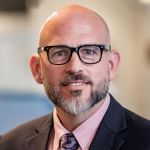
Marc A. Nascarella, Ph.D., MS, CPH
Associate Professor, Health Sciences & Director, Health Sciences Research
Sa Liu, Ph. D., MPH, CIH
Assistant Professor, Occupational and Environmental Health Sciences
Ben Bostick, M.S., Ph.D.
Ben Bostick is a Lamont Associate Research Professor at the Lamont-Doherty Earth Observatory at Columbia University. Dresearch and consulting interests include soil and aqueous geochemistry, mineralogy, tropical soils and soil fertility, environmental health, and environmental remediation. He is involved in numerous field and lab studies that chronicle the environmental chemistry of metals in the environment, the biogeochemistry, human health impacts and environmental impacts of those metals. He studies experimental and field-based systems using synchrotron-based spectroscopy and other methods. Dr. Bostick holds B.A., B.S., and M.S. degrees from the University of Idaho and a Ph.D. from Stanford University.
Simba Tirima, Ph.D.
Simba Tirima, a Kenyan national, has a B.S. in Agriculture from the University of Eastern Africa, an M.S. in Agricultural Science from University of Idaho (UI), and a Ph.D. in Environmental Science from UI. Dr. Tirima’s diverse professional history includes teaching Environmental Perspectives, International Environmental Issues, and Environmental Economics and Policy at UI, where he was also International Marketing Manager for the International Program Office. Dr. Tirima worked for TerraGraphics Engineering (now Alta Science and Engineering) as a Research Associate and Environmental Scientist and has been a core member of the TIFO team since the organization was founded, working as Director of Field Operations for the Nigeria project. He currently works as Deputy Head-of-Mission for Médecins Sans Frontières (MSF) in Nigeria, where he is responsible for liaising with government officials, coordinating institutional controls program in Niger and Zamfara States, and assisting with MSF’s operational programmatic needs. In 2018, Dr. Tirima received The Award of Excellence from the Vice President of Nigeria for his work addressing lead poisoning in Nigeria.
Sandra Spearman, M.S.
Sandra Spearman is an environmental health scientist with degrees from the University of Idaho (M.S.) and Washington State University (B.S.). Ms. Spearman collaborated with TIFO on a joint human health risk assessment in the Kyrgyz Republic as part of her graduate research and continues to provide support for the project. In this effort, Ms. Spearman has been responsible for site history research, GIS analyses, environmental data collection and analysis. She analyzed environmental results to determine if the soil sampling instrumentation and associated methods used during the sampling efforts could be a viable, accurate, and cost-effective solution for humanitarian organizations to use in environmental health projects. At Washington State University (WSU), she conducted research on challenging traditional views of meandering river migration, presenting on her findings at the Showcase for Undergraduate Research and Creative Activities. During her time at WSU, Spearman interned at the Palouse Conversation District conducting Water Quality and Watershed Health Assessments, and was the president and co-founder of the Water Resources Club.
Jerry Lee, M.S.
Jerry Lee holds B.S. degrees in Environmental Science and General Agriculture, and an M.S. in Environmental Science. Mr. Lee was formerly President of TerraGraphics Environmental Engineering (now Alta Science and Engineering), where he has over 30 years of experience planning, conducting, and overseeing a myriad of environmental investigations at hazardous waste sites throughout the US. His work supported USEPA Superfund cleanup and litigation efforts representing citizens impacted by exposure to environmental contamination and hazardous conditions from nearby sources. Contaminants of concern included inorganic and organic chemicals in the soil, groundwater, surface water, biota, and air. Mr. Lee worked closely with the State of Idaho regulators and the USEPA to ensure compliance with local, state, and federal requirements, and his work resulted in recognition and achievement awards from these entities. Since 2018, Jerry has been a board member of Idaho Rivers United working to protect the Wild and Scenic areas of Idaho by intervening when logging, mining, or other damaging practices pose threats.
Lubia Cajas de Gliniewicz, Ph.D.
Lubia Cajas de Gliniewicz, a Guatemalan national, earned her Ph.D. in Environmental Science at the University of Idaho (UI) and served as the Environmental Science Program Coordinator. Her areas of interest are sustainability, environmental and social entrepreneurship, and international development. She is a recipient of numerous awards and fellowships, including the Fulbright Program, the Experimental Program to Stimulate Competitive Research, and the Ford Foundation. Since 2009 she has coordinated programs for international students at UI. Dr. Cajas de Gliniewicz worked at the University of San Carlos in Guatemala and at the National Council for Protected Areas as the department head of the Hydrobiological section. Additionally, she was engaged in education and development programs for rural areas and indigenous communities in her home country.
Rebecca Witinok-Huber, Ph.D.
Rebecca Witinok-Huber has a Ph.D. in Water Resources from the University of Idaho (UI). Dr. Witinok-Huber received a National Science Foundation Integrated Graduate Education and Research Traineeship for her doctoral studies. As a conservation social scientist Dr. Witinok-Huber brings a unique background in mixed-methods approaches to community-based work. Her experiences and expertise include work with women and water groups in northern Kenya, and collaboration with the Liberian Ministry of Agriculture where she co-developed and led a USAID-funded project that involved investigating gender equity, nutrition, and agricultural extension services for over 600 smallholder Liberian farmers. She has worked as part of interdisciplinary teams in northern Idaho on lead contamination communication networks and on a climate change adaptation project with the Nez Perce Tribe’s Water Resources Department. Dr. Witinok-Huber excels in inter and transdisciplinary teams working toward highly localized goals related to social and environmental sustainability and justice. Rooted in social-environmental contexts that highlight place, her work emphasizes place-based connections through spatial analysis and visualization.
Varduhi Petrosyan, Ph.D.
Varduhi Petrosyan, an Armenian national, is a Professor of Health Sciences from the American University of Armenia Gerald and Patricia Turpanjian School of Public Health (SPH). Dr. Petrosyan is the current Dean of the SPH and Director of the Center for Health Services Research and Development (CHSR) and was the Associate Dean in 2007-2015. She has a Ph.D. from Johns Hopkins University Bloomberg School of Public Health, Department of Health Policy and Management, a M.S. focusing on environmental health from the University of Idaho, and a degree in biochemistry from Yerevan State University. She has successfully led health services research projects in Armenia and the region focusing on public health services, tobacco control, tuberculosis control, primary care, ophthalmic care, diabetes care, environmental health, and other important projects. In 2011-2016, Dr. Petrosyan was a member of the Armenian Country Coordination Mechanism for HIV/AIDS, tuberculosis and malaria programs. In 2012-2014, Dr. Petrosyan was the Advisor on Health Reforms to the Prime Minister of the Republic of Armenia on a voluntary basis. Currently, she is a member of the Public Council next to the Minister of Health of the Republic of Armenia (MOH), the Management Council of the Health Inspectorate of the MOH, and the Working Group on Cancer Control Strategy of the MOH. She is currently the Associate Editor of the International Journal for Equity in Health.
Chris Eckley, Ph.D.
Chris Eckley is a Mining Geochemist at the US EPA Region-10 office. His work focuses on the remediation of mercury and other heavy metal contaminated sites, with a specific focus on processes effecting mercury methylation in aquatic systems. He has a Bachelors of Science degree in environmental science from Western Washington University, an M.S. in Watershed Ecosystems from Trent University, and Ph.D. in Physical Geography from the University of Toronto. Dr. Eckley completed a postdoc at the University of Nevada, Reno and an international visiting fellowship at Environment Canada. *Participation in this network does not reflect EPA policy, endorsement, or action.
Ro Afatchao, Ph.D.
Romuald (Ro) Afatchao is a clinical professor and the Associate Director of The Martin Institute and the International Studies Program at the University of Idaho (UI) with more than ten years of experience in international development. Dr. Afatchao has a law degree and an L.L.M. in environmental law and politics from University of Lome in Togo, an M.A. in International Studies from University of Limoges in France, and a Ph.D. in Environmental Science from UI. A native of Togo, he co-founded a Togolese NGO – The National Association of Consumers and the Environment – in the late 1990s. In 2010, Dr. Afatchao founded the Institute for Community Partnerships and Sustainable Development. Dr. Afatchao teaches courses on international studies and international development and is a frequent guest lecturer on cross-cultural issues at the University of Idaho.
Karel Van Damme, M.D.
Karel Van Damme is a Belgian physician specialized in Occupational Health. Dr. Van Damme has dedicated his career to protecting the health and safety of workers in several capacities: as a public administrator and labor inspector, as a personal advisor to several Belgian federal ministers of work, and as a president of the Belgian Compensation Fund for Occupational Diseases. He is now the president of the Belgian National Council on Protection and Prevention at Work, where employers and trade unions are represented together with experts. Dr. Van Damme played an important role in improving Occupational Safety and Health (OSH) protection of workers at the EU level and was involved in developing regulatory processes both nationally and internationally in the field of OSH. He was a researcher at the Center for Human Genetics at the University of Leuven. In this capacity, he leads several national and European research projects, mainly related to scientific, social, and ethical aspects of susceptibility testing and health surveillance of workers, and on epidemiological research on haemato-lymphopoietic disorders resulting from occupational and environmental exposures. Dr. Van Damme has lectured internationally on OSH and serves as an external expert for the International Labor Organization. Dr. Van Damme is a member of the Collegium Ramazzini, an international group of experts in the fields of occupational and environmental health. In 2017, Dr. Van Damme received the Ramazzini Award for his efforts to improve the ethical basis for screening and monitoring practices in occupational medicine and for his advocacy and efforts to improve occupational safety and health protections in Belgium and internationally.
Mary Jean Brown, R.N., Sc.D.
Mary Jean Brown is an Adjunct Assistant Professor of Social and Behavioral Sciences at the Harvard Chan School of Public Health and the former Chief of the Healthy Homes and Lead Poisoning Prevention Branch at the U.S. Centers for Disease Control and Prevention (CDC). An internationally recognized expert and leader in the field of childhood lead poisoning prevention, Dr. Brown has provided her expertise to health officials in the US, China, Kosovo, and Nigeria. She works regularly with other US public health agencies, including the Environmental Protection Agency and Department of Housing and Urban Development, and international organizations including the World Health Organization and Doctors Without Borders. She has published more than 100 peer-reviewed articles, commentaries, and policy documents. Dr. Brown received a Doctor of Science degree from the Harvard School of Public Health in 2000. She is a registered nurse with a B.S. degree from Boston College in 1982.
Barbara Cosens, L.L.M, M.S., J.D.
Barbara Cosens is a University Distinguished Professor Emerita with the University of Idaho College of Law. Her LL.M. is from Lewis and Clark law school, J.D. from the University of California, Hastings, M.S. in Geology from the University of Washington, and B.S. in Geology from the University of California, Davis. Her teaching and research expertise is in water law, the law-science interface and water dispute resolution. She was co-PI on the UI Water Resources IGERT focused on adaptation to climate change. She co-chaired the Adaptive Water Governance project made possible through support from the NSF funded National Socio-Environmental Synthesis Center, SESYNC, and spent spring 2015 as the Goyder Institute in Australia comparing water law reform in the western U.S. and Australia during drought. In her outreach and engagement, she provides education and expertise on the Columbia River Treaty as part of the Universities Consortium on Columbia River Governance.
Marc A. Nascarella, Ph.D., MS, CPH
Dr. Marc A. Nascarella is a health scientist with broad training in public health, toxicology, epidemiology, and exposure science. He currently serves as a full-time graduate faculty member at the Massachusetts College of Pharmacy and Health Sciences where he teaches and advises graduate students conducting health science research. His professional interests are focused on the development and implementation of cross-sector systems that translate basic and applied environmental health science into practical interventions to reduce health disparities. Dr. Nascarella routinely serves as a senior science advisor to international and US-based public health policy makers at the local, state, and federal level, seeking practical regulatory or interventional approaches to reduce harmful levels of exposure to contamination in food, environmental samples, and consumer products. Dr. Nascarella is a certified public health professional (CPH), with a BS from Norwich University, Military College of Vermont (Northfield, VT) and an MS and PhD from the University of Massachusetts School of Public Health and Health Sciences (Amherst, MA). He has previously served as the State Toxicologist for the Department of Public Health in the Commonwealth of Massachusetts.
Rob Hanson, M.S.
Rob Hanson holds a B.S. in Soil Science and a M.S in Soil Chemistry and Fertility from Colorado State University. He retired from the Idaho Department of Environmental Quality in 2018 after a 29-year career where he was responsible for mine site remediation, voluntary cleanup, and general remediation programs. Mr. Hanson’s experience includes managing the Bunker Hill Superfund Site for the State of Idaho, where he negotiated settlement agreements with responsible parties and worked with the federal government to develop cleanup plans. He has managed and directed preliminary assessments, remedial investigations, feasibility studies, risk assessments, records of decision, public outreach, and risk communication programs. Mr. Hanson received recognition from the Idaho State Governor and the US federal government for his work to move complex projects forward to achieve cleanup goals.
Shehu Muhammad Anka
Shehu Muhammad Anka is a Nigerian national and employee of the Zamfara State Environmental Sanitation Agency. He has a Certificate in Science Laboratory and Technology from Federal Polytechnic Kaura Namoda, a Higher National Diploma in Environmental Science from Kaduna Polytechnic, and a Post-Graduate Diploma in Public Health from Abubakar Tafawa Balewa University Bauchi. Mr. Anka, a Registered and Licensed Environmental Health Officer, has trained local, state, federal, and international stakeholders in lead health risk assessment, mitigation, and communication. He worked as Assistant Project Manager on the Lead Poisoning Environmental Response in Northern Nigeria and currently coordinates the Institutional Controls Program for Zamfara State lead-impacted villages. Mr. Anka has presented at multiple conferences and workshops and co-authored several peer-reviewed publications. He has worked with international NGOs including TIFO, Occupational Knowledge International, Médecins Sans Frontières, World Health Organization, and Centers for Disease Control and Prevention on safer mining in ASGM, community engagement, environmental remediation, risk assessment, and project sustainability.
Bryn Thoms
Bryn Thoms is a hydrogeologist with Oregon Department of Environmental Quality’s (ODEQ’s) Cleanup Program. He oversees cleanup projects, including solvent groundwater plumes, legacy pesticide sites, former wood products mill sites, petroleum releases, and abandoned mine lands. Mr. Thoms is the technical director of the Environmental Health Council, an international non-profit organization dedicated to addressing environmental contaminants. In 2015, he became active with the Interstate Technology and Regulatory Council as a result of overseeing one of the first ODEQ projects that utilized bioavailability adjustments in human health risk assessment. Mr. Thoms helped develop the Decision Section of the Bioavailability Guidance document, where his regulatory experience provided valuable perspective on incorporating bioavailability into the regulatory cleanup process. Mr. Thoms has a B.S. in geology from Oregon State University and has been an Oregon registered professional geologist since 1997.
Sa Liu, Ph. D., MPH, CIH
Sa Liu is an Assistant Professor of Occupational and Environmental Health Sciences at School of Health Sciences, Purdue University. She is an exposure scientist and certified industrial hygienist. Her research focuses on assessing chemical exposure by multiple pathways in both occupational and environmental settings. She has led several occupational and environmental health studies and participated in major occupational epidemiologic studies. Dr. Liu’s current projects focus on, 1) assessing workers’ exposure to manganese in welding fumes; and 2) assessing community’s exposure to volatile organic compounds in groundwater and related health effects through taking a community based participatory research approach. These projects are funded by NIEHS and private foundations.
Lindsay Wichers Stanek, Ph.D.
Lindsay Wichers Stanek is an expert in air pollution, specifically particulate matter (PM), ozone, nitrogen oxides, sulfur oxides, and lead. Dr. Wichers Stanek served on TIFO’s Board of Directors from 2012-2021. Her expertise in animal toxicology was developed during her Ph.D. research at University of North Carolina on cardiovascular and pulmonary effects in rodents exposed to PM. Through her subsequent assessment work at the Office of Research and Development’s National Center for Environmental Assessment and research oversight role at the National Exposure Research Laboratory, she has developed cross-disciplinary knowledge that enables integration of scientific evidence. Dr. Wichers Stanek’s responsibilities have also entailed working across EPA’s ORD, Program Office partners, and Regional Office partners to design and execute research that is of the greatest impact to fulfill a mission of protecting public health and the environment. *Participation in this network does not reflect EPA policy, endorsement, or action.
Lauren Cooney, M.S., R.N.
Lauren Cooney is a registered nurse with an M.S. in Public Health and Tropical Medicine. In addition to 10 years of clinical nursing experience in acute care settings in Australia and the UK, Ms. Cooney has 14 years of experience in international health settings in senior coordination and leadership positions. Ms. Cooney has worked in, coordinated, and advised on projects with Médecins sans Frontières, including working with TIFO on the 2010 lead poisoning outbreak in Nigeria, where she was the Project Emergency Manager.
Gregory Moller, Ph. D. F.N.A.I.
Gregory Moller has degrees in chemistry from Wichita State (B.S.) and University of California Davis (Ph.D.). For the past three decades, Dr. Moller has pursued teaching environmental toxicology and sustainability in many forums. He is a professor at the University of Idaho and faculty at Washington State University and has received multiple teaching excellence awards, including the National Excellence in College and University Teaching (2014), the Excellence in Teaching award (2007), Excellence in Outreach Award (2002), Outstanding Environmental Sciences Faculty Award (2001), and Outstanding Research Award (2010). Dr. Moller’s online digital education films have been recognized by the Yosemite International Film Festival. His research focuses on translational, trans-disciplinary sustainability solutions to water pollution and has resulted in seven patents for innovative, award winning water treatment technology.
Sarah Rothenberg, D.Env
Sarah Rothenberg is an Associate Professor at Oregon State University, in the Environmental and Occupational Health core program. For over 10 years, Dr. Rothenberg’s research has focused on rice and mercury, mainly in rural China. After completing her doctoral degree in 2007, Dr. Rothenberg was a NSF-funded postdoctoral researcher living in Guizhou province, China, where she investigated mercury cycling in rice paddies. After returning to the U.S. in 2011, Dr. Rothenberg was funded by NIEHS to establish a birth cohort in Guangxi province, China, where rice (not fish) was the main dietary source of methylmercury, to study prenatal methylmercury exposure and children’s neurodevelopment. Dr. Rothenberg also investigates the health impacts from other trace metals, which co-occur with mercury in the environment.
Barry Green, Ph.D.
Barry Green is an independent researcher currently working on the topic of Economic Compensation for Environmental Damages in Mining in Developing Countries from a historical perspective. He is a past recipient of a U. S. Fulbright Scholars Award for Bolivia (2017-2018), where he conducted research on Economic Compensation for Environmental Damages in Mining in Developing Countries on a current mining operation. Previously, Dr. Green was an Environmental Consultant in Afghanistan, a Program Specialist in Papua New Guinea, and an Environmental Program Officer in Uzbekistan, all for the United Nations Development Programme. Also, he conducted field work for The Earth Institute at Columbia University, in gold mines in Tanzania, and Guinea, and was the Environmental Officer for the U. S. Peace Keeping Troops in the Former Yugoslavia. Additionally, Dr. Green served in Peace Corps Response (Guyana), and Peace Corps (Ecuador and St. Lucia).
Olivia Collet, M.S.
Benoit Nemery, M.D., Ph.D.
Ben Nemery has degrees in medicine, occupational medicine and toxicology. He has been affiliated, since 1987, with the Medical Faculty of the University of Leuven (KU Leuven) in Belgium where he is a member of the Centre for Environment and Health in the Department of Public Health and Primary Care. He became Emeritus Professor on 1 October 2018, but has continued his teaching, clinical and research activities. He holds a weekly outpatient clinic for environmental and occupational pulmonary disorders in the university hospîtal.
His research involved experimental as well as clinical-epidemiological studies in the mechanisms of lung disease caused by occupational and environmental pollutants. Recently he has concentrated on occupational and environmental health in the global South, especially in the mining areas of DR Congo. He is a member of the Royal Academy of Medicine of Belgium and various other national and international scientific bodies, including the European Respiratory Society, where he held leadership positions, and the Collegium Ramazzini.
Dennis Nowak, M.D.
Dennis Nowak holds degrees in medicine (1985), pulmonology (1991), allergology (1991), epidemiology (1995), occupational medicine (1995), environmental medicine (1996), and internal medicine/pulmonology (2001). He is chair of occupational, social and environmental medicine at Ludwig Maximilian University (LMU) and deputy at Technical University Munich (TUM) since 1998. He is member in 13 scientific societies, 15 Editorial Boards of journals, serves more than 15 national and international occupational and environmental health boards, and has received national and international awards. His research involves experimental and clinical-epidemiological studies in mechanisms of occupational and environmental respiratory disease as well as issues on occupational psychology and other fields around. He has been serving on a variety of national and international scientific bodies and is (co-)author of more than 380 medline listed articles and editor and author of 20 books on issues of occupational and environmental medicine.
Carol Rice, Ph.D.
Dr. Rice is Professor Emerita in the Department of Environmental and Public Health Sciences at the University of Cincinnati (UC) College of Medicine. She obtained a BA in math and physics from Bennington College, an SM in industrial hygiene and air pollution control from the Harvard School of Public Health and a PhD in Environmental Science from the University of North Carolina School of Public Health. Dr. Rice has been certified in the Comprehensive Practice of Industrial Hygiene since 1977.
In addition to academic work, she was a compliance officer for the Vermont OSHA program. She was elected Chair of the ACGIH, to the APHA Governing Council and the Collegium Ramazzini.
As a faculty member at UC, Dr. Rice developed a strong research program in current and historical exposure assessment to compounds including creosote, silica, Adriamycin, Libby amphibole, beryllium, and a range of exposures at Department of Energy sites. Dr. Rice founded the NIEHS-funded Midwest Consortium for Hazardous Waste Worker Training in 1986 and directed the program until 2020, training approximately 17,000 participants annually in later years. From 2008 to 2012, Dr. Rice directed the NIOSH-supported Education and Research Center.
James G. Crock, Ph.D.
James G. Crock is a retired analytical geochemist (37 years) with the U.S. Geological Survey, Crustal Geophysics and Geochemistry Science Center in Lakewood, Colorado. Dr. Crock earned a B.S. from Mount Union College in chemistry and geology, an M.S. from Pennsylvania State University in geochemistry, and a Ph.D. from the Colorado School of Mines in geochemistry. His research focused on methods development in analytical geochemistry and environmental geochemistry. Dr. Crock has published methods for the determination of numerous elements in “a wide variety of” geological and environmental matrices using various spectroscopic methods. “He also has published on various environmental studies, both internationally and nationally.” He also served for ten years as the Associate Director of his Science Center.
Vincent Cleveland
Vincent Cleveland has been working with TIFO as part of his MPH program at George Washington University investigating the correlation between the lead measurement methods at the Zamfara, Nigeria remediation site. Vince is based in Washington DC working as a biomedical engineer at Children’s National Hospital researching congenital heart disease and developing new treatment options by 3D printing and testing surgical grafts. Before coming to DC he spent three years living in Libera, West Africa as a biology professor and as the study manager for a sepsis research project. While in Liberia he worked with the local hospital staff, building their microbiology and hematology labs. He has always been interested in environmental and global health programs and joined the US Peace Corps leading environmental clubs in an Armenian middle school. Growing up in Colorado he developed a great love for outdoor adventures including backpacking, mountain biking, and white-water rafting.
Steven Daley-Laursen, Ph.D.
Over 43 years at Montana State University, University of Minnesota and University of Idaho, Daley-Laursen was a faculty member, Extension specialist/program leader, center director, Sea Grant college director, and executive administrator at college and university levels. He was University of Idaho PI for the US DoI NW Climate Science Center, founding director of the Northwest Knowledge Network, UI Federal Relations officer, and co-founder/director of the BIA-funded National Tribal Climate Camp. He served as chair of the USDA Secretary’s National Advisory Board on Research, Education and Extension. Daley-Laursen’s scholarly work included modeling of forest systems, forest entomology, leadership development in higher education, public policy, institutional partnerships, technology transfer methodology, and environmental conflict management. He focused on interdisciplinary research and community engagement. He worked in China, Chile, Portugal, Spain and Italy. In his final years as an academic he taught courses in society and natural resources, natural resource policy, and eco-restoration/project management, and he continues to serve on Ph.D. committees. Daley-Laursen earned a B.S. in conservation and resource development (1975) from the University of Maryland, and an M.S. in Forest Resources (1980) and Ph.D. in Forest Science (1984) from the University of Idaho. Steve and his spouse, Dianne, live in Moscow, Idaho where they are active in volunteer activities, international service and outdoor play.
Martha Mcalister, PH.D.
Martha is interested in the underlying structures that drive the design and outcomes of global environmental health interventions. Martha is studying the use of systems thinking as an approach to problem solving and system dynamics modeling as a tool for learning and engagement. She is a Returned Peace Corps Volunteer (Vanuatu) and received her MS in Environmental Engineering from the University of South Florida and her BS in Civil Engineering from Oregon State University. Martha also holds a degree in Music Performance from the University of Idaho.
Ainash Sharshenova, M.D.
Since 1983, Dr. Sharshenova has worked as a researcher in Occupational and Environmental Medicine at the Scientific and Production Centre for Preventive Medicine (SPCPM) of the Ministry of Health of the Kyrgyz Republic (MoH KR). Since 2005, she’s been a Professor of the Public Health Department for the International Higher School of Medicine (IHSM). Dr. Sharshenova has worked monitoring indicators of public health and the state of the environment, and in identifying cause-and-effect relationships and health risk factors. These indicators also account for the socio-economic and environmental characteristics of the regions, and develop evidence-based measures for the prevention of infectious and non-infectious morbidity of the population. She has prepared and published numerous books, articles, abstracts, manuals (standard operating procedures, instructions), methodological manuals, newsletters, and press releases. Her work also includes training of scientific personnel, public health doctors, medical students, and undergraduates and doctoral students.
Dr. Sharshenova also worked as the leader/principal investigator on the WHO/UNEP “Pilot survey on assessment of prenatal exposure to mercury in Kyrgyzstan” (2016-2017) as well as other projects, including: “Assessment of the impact of climate change on the health of the population of the Kyrgyz Republic” (WHO, 2009-2011); “The Road Safety in the city of Bishkek” (WHO, 2004); Swiss-SCOPES Projects;. “Environmental Monitoring and Management Capacity Building: Kyrgyz Republic” (Scott Wilson Company, MFA of Finland, and the Government of the Kyrgyz Republic, 1999-2001).
Accreditation, Memberships, and Affiliations
Observer to the United Nations Environment Assembly of the United Nations Environment Program
Mountain Partnership: Food and Agriculture Association
Collegium Ramazzini
Fellows: Phil Landrigan, Denny Dobbin, Margrit von Braun, Casey Bartrem