

Newsletter contents
Chaotic periods are often associated with stress and negativity, but I’d argue they can also be moments to find joy, build cohesiveness, and discover opportunities. In addition to project progress, we have some exciting and bittersweet changes happening at TIFO this spring.
First, we have a new student intern – Hanna Tait – joining us to support ongoing projects in Central Asia and to help us develop a new community outreach program we’re so excited to tell you about – when it’s ready! 🤐
We’re also thrilled to have Sierra Brantz, an Idaho-native, UIdaho graduate, and environmental health enthusiast, join our team. Sierra will be working remotely from DC, supporting projects in Kazakhstan, Georgia, and Duck Valley.
Finally, we’re sending Whitney Schroeder off on her next professional adventure. In her three years at TIFO, Whitney has helped our organization grow in innumerable ways, bringing dedication, curiosity, and deep passion for helping others to every project and task. Because of her, we have stronger internal processes, clearer communications, and beautifully designed materials that help tell the stories of the communities we serve. The thoughtful, respectful way she engages our partners near and far has been especially powerful to witness, and I know she has passed that on to dozens of students she supported and mentored in her time here. I’m so grateful for all she does for this world, and am glad she isn’t going too far away. Please join me in thanking Whit for her contributions to TIFO and the communities we serve.
Finally, keep an eye out for a job posting soon! And if we’re a little delayed in communications in the meantime, it’s because we’re focusing on our projects and bringing on great people to join our team.
In gratitude,
Casey
Hi everyone! My name is Sierra, and I love sharing good food with friends and family, baking chocolate chip cookies, doing outdoor activities, and picking huckleberries. I am also skilled at basic juggling and teaching youth/kids how to rock climb!
Overall, I’m passionate about serving my community and helping build resilience to protect both human health and the environment. My work and interests have long centered around the interconnectedness of environmental and human health, often referred to as One Health. That passion began in high school, continued through my undergraduate studies at the University of Idaho, and later inspired me to pursue a master’s in Global Health at the University of North Carolina. That’s why TIFO’s mission immediately resonated with me: they fight to uphold community and childhood health in some of the most vulnerable spaces while grounding their work in community-based, community-led approaches. Another key reason TIFO piqued my interest was learning that it has its roots in my hometown, the Silver Valley.
What I am looking forward to most about working with TIFO is working alongside and learning from such a passionate team while contributing to work that helps communities respond to, prevent, and protect against the health impacts of environmental degradation and industrial pollution locally and internationally.
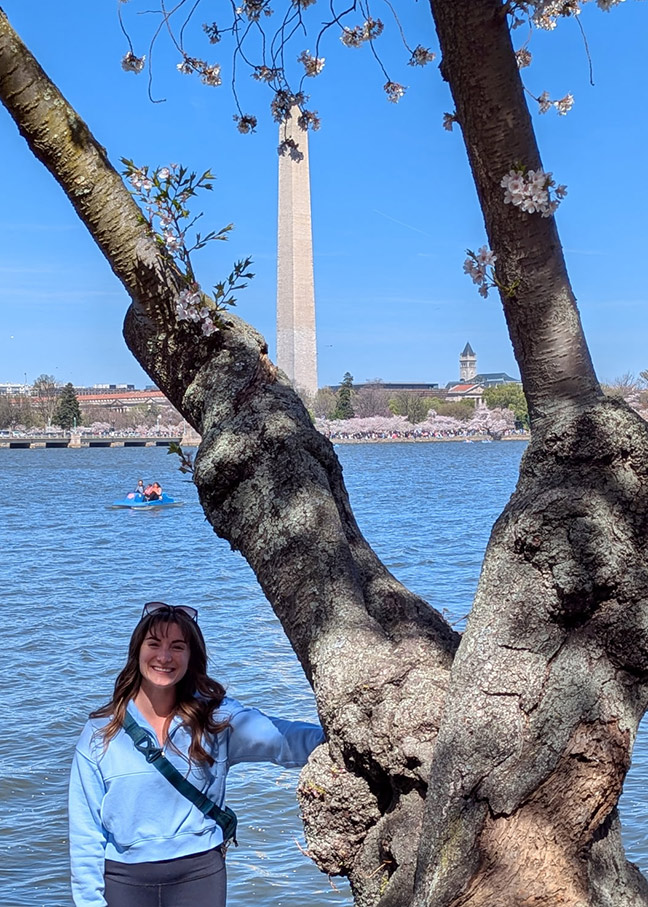
Sierra in Washington, D.C., with the Washington Monument in the background.
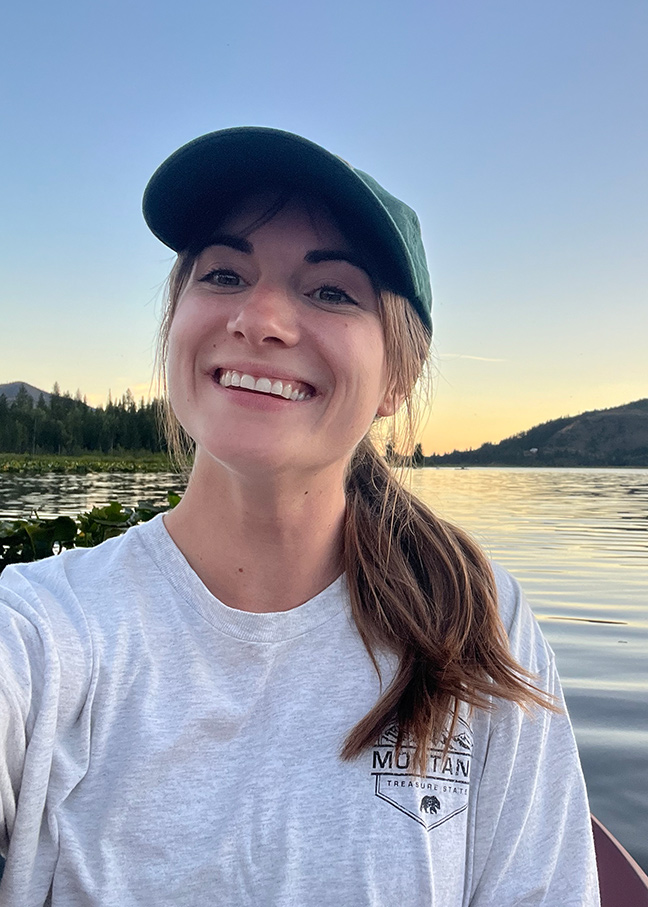
Sierra enjoying an evening sunset on the water in the Silver Valley region of Idaho.
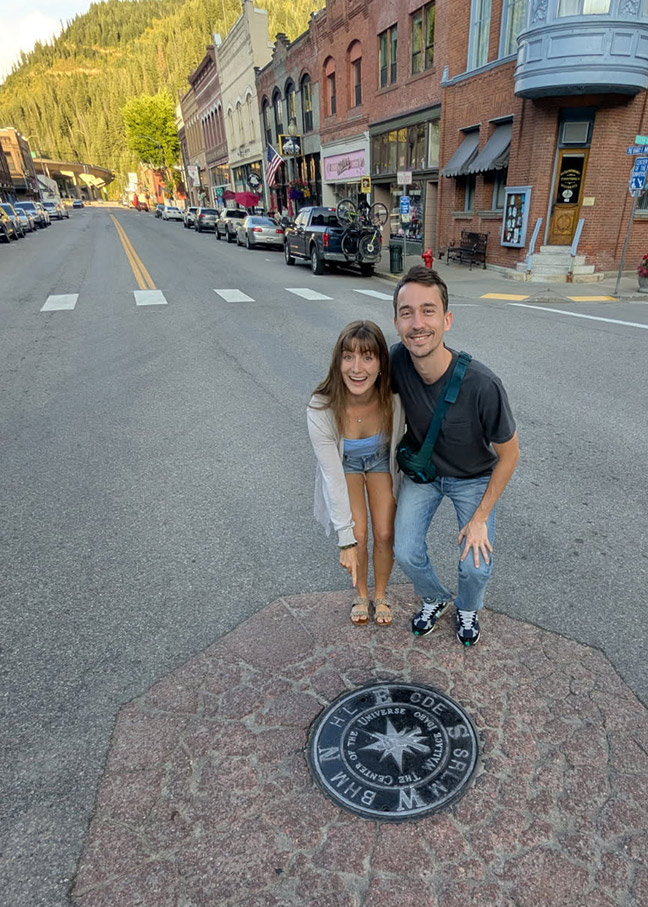
Sierra pointing to the “Center of the Universe” manhole cover in Wallace, ID.
My name is Hanna Tait, and I am a junior at the University of Idaho, double-majoring in Ecology & Conservation Biology and Rangeland Ecology & Management. I grew up in rural Australia, working on cattle properties, and have always enjoyed being outside as much as possible. After graduation and likely more schooling, I aim to work on developing sustainable global food systems, but I have yet to figure out exactly what that career path looks like. I have two younger brothers, who are now both taller than me and remind me every day that I am the shortest in the family. Additional goals for the summer include learning embroidery and Spanish.
I was initially referred to TIFO by a professor on campus when I reached out about possible internships/volunteer opportunities with international NGOs or in sustainable agriculture. So I was very keen to learn about the summer position here because reading about the projects TIFO is involved in was fascinating, and I very much agree with the assertion that everyone deserves a safe place to live. So I am most excited to learn more about how those projects are developed and executed.
I am looking forward to meeting everyone in person.
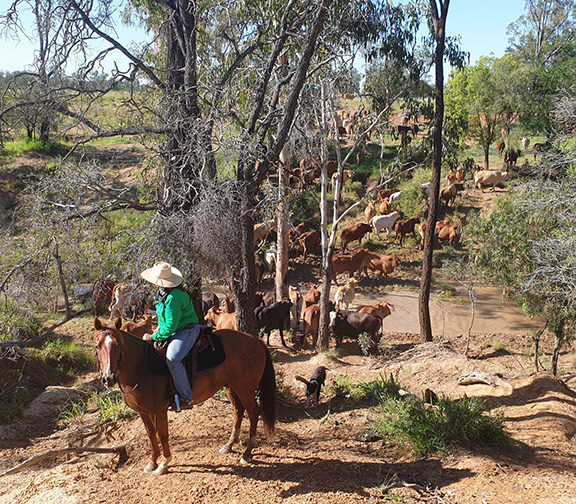
Hanna’s family moving cattle on family property in Queensland.
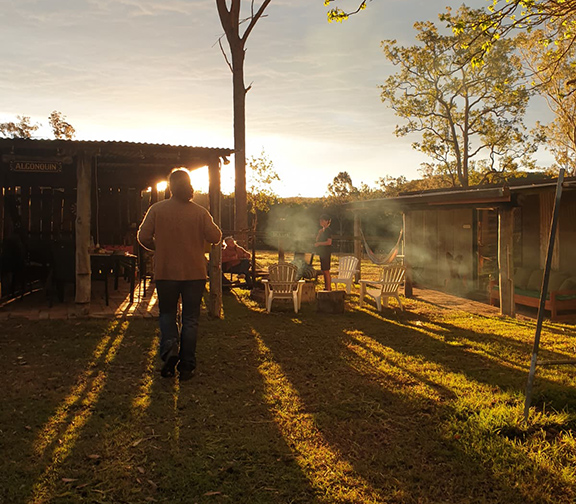
Hanna and her family enjoying sunset and an outdoor meal in her family’s outdoor eating area (knick-named the Dead Dingo Diner) at their home in Australia.
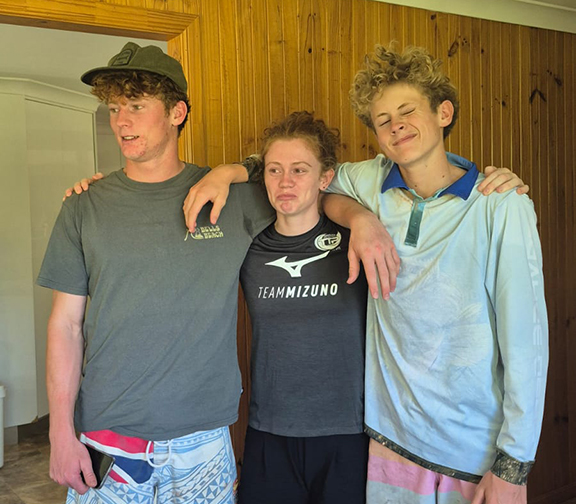
Hanna (center) lamenting that her younger brothers, Will (on the right) and Callum (on the left), have now surpassed her in height.
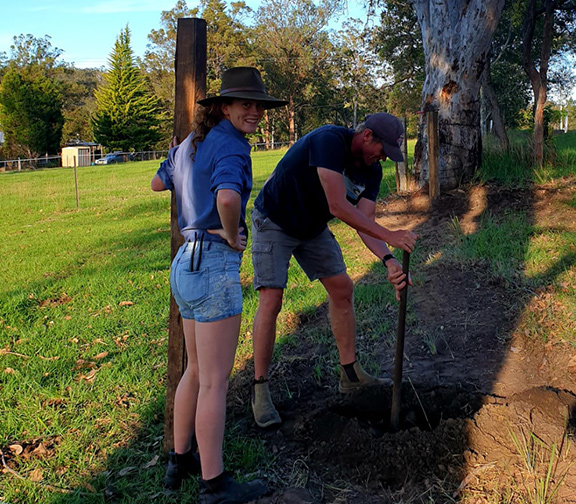
Hanna helping her dad install a new fence.
When the EPA canceled our Environmental Justice grant in 2025, we immediately began looking for ways to continue supporting our Shoshone-Paiute Tribal partners. Much of the original grant funds were to pass through TIFO directly to the Tribes.
In fall 2025, TIFO submitted a Letter of Intent for a Thriving Communities Grant through Philanthropy Northwest — a funding opportunity designed to support capacity-constrained organizations serving small or rural communities. In early 2026, we were invited to submit a full application, and we were recently notified that our proposal was accepted!
This funding will help us continue, in part, the work originally supported by the EPA grant, including ongoing collaboration, education, and community-centered environmental health efforts with the Shoshone-Paiute Tribes. We are deeply grateful for this support and encouraged by the opportunity to continue showing up for communities we are honored to work alongside.
In May, Casey Bartrem (TIFO), Racheal Thacker (SPT), and Aunna Woods (SPT) traveled to the Wind River Indian Reservation to participate in a Transformative Adaptation Workshop hosted by the University of Wyoming and Wy-ACT and organized by TIFO collaborator Becky Witinok-Huber. This was a great opportunity for Casey, Racheal, and Aunna to meet with other Tribes and organizations working on climate change issues, brainstorm adaptation and collaboration ideas, and learn from others’ experiences.
From a desk in Bend, Oregon, Madi Thurston spends her days looking at maps for utility companies in places she has never lived — Rhode Island, Kentucky, and Indiana. The maps are nothing like the ones she was making five years ago.
Then, she was a junior at the University of Idaho. Her summer internship had fallen through due to COVID, and a campus seminar introduced her to TIFO. She reached out, and TIFO’s Executive Director, Casey, worked with her to design a remote internship.
The project focused on a lead poisoning epidemic in the mining villages of Zamfara, Nigeria, where artisanal gold mining had been linked to severe soil contamination and the deaths of hundreds of children. Thurston used GIS to build heat maps of soil-lead concentrations across the villages and asked new questions of TIFO’s field data. She presented her findings at conferences.
“It was a lot of freedom, which I don’t always do well with,” Thurston says. “But it pushed me to explore different things, investigate things from all sides, and find ways to look at the data in different ways.”
What she returns to most, though, is Casey — and the confidence the mentorship built.
“Probably the best takeaway from the experience was that it gave me the confidence to go into an industry I had no experience in, besides the GIS part, and be able to say: I can learn this. I can do this. I deserve to be here, and I can make a career out of it.”
That confidence carried her into her current role at a GIS consulting firm. The independent research project she’d built with TIFO is what got her in the door.
The maps Thurston made that summer have, in their own way, never stopped working. They became the research project she pointed to in interviews. They became proof of what she could figure out on her own. And what she learned making them has followed her into a career she did not see coming.
“There are so many takeaways,” she says. “It was a great experience.”
Connect with Madi: https://www.linkedin.com/in/madithurston/
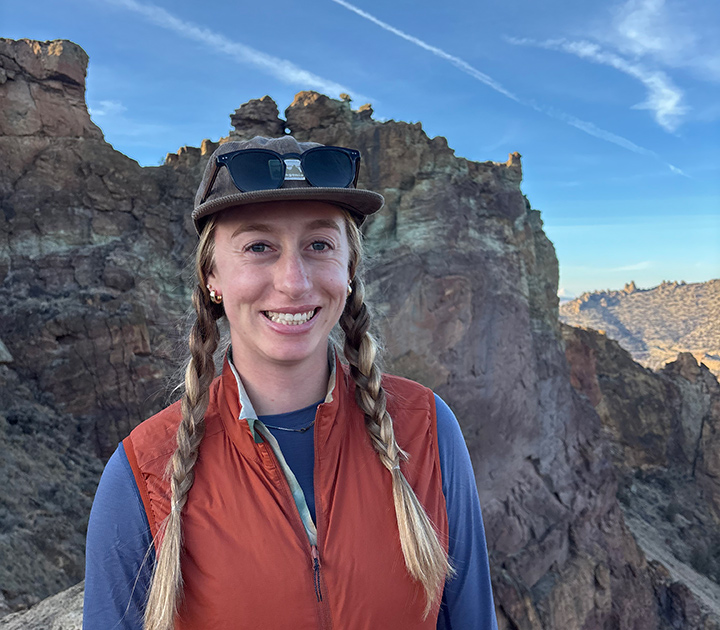
Madi Thurston enjoying time outside.
TIFO co-founder Dr. Ian von Lindern sat down with filmmaker Marilena Marchetti to discuss what he calls “the return of mining to the United States.” Their conversation focuses on the Stibnite Gold Project, an open-pit mine on a former Superfund site in Idaho. As an expert witness in one of three active lawsuits, Dr. von Lindern explains how proposed regulatory changes could compress a lifetime of arsenic exposure into as little as six years for children living nearby — and how lessons from TIFO’s lead poisoning work overseas connect directly to what’s now unfolding closer to home.
We’ve had the pleasure of working with Gulzat Madmarova since 2018, when she started a position with MSF in Kadamjay. Over the years working with the Kyrgyz MOH and MSF, Gulzat became a leader on the project and was always a friendly, familiar face we looked forward to seeing in Kadamjay. When we were awarded US Department of State funding, together with our partners at MCPHS, to develop environmental health training for health care workers in mining-impacted communities, Gulzat served as Project Coordinator for TIFO.
This spring, Gulzat traveled to the US to visit family who immigrated here for work. We were thrilled that she was willing to take a few days away from family to visit us in Moscow! Gulzat joined TIFO staff, board members, and students for a dinner, met with TIFO supporters for a small lunch downtown, and presented to University of Idaho students (name the class name) on her experience working for foreign NGOs in Kyrgyzstan. She also experienced the mercurial weather of April on the Palouse (Gulzat is from a mercury-mining area in Kyrgyzstan – pun intended)! Many thanks to Gulzat for taking the time to join us here in Moscow and connect with students and the TIFO team.
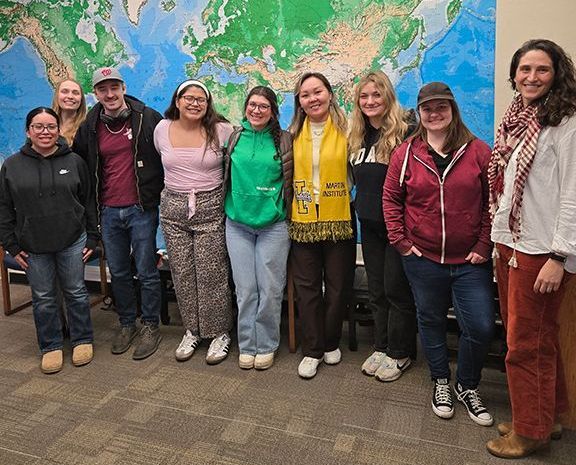
Casey (far right) and Gulzat (4th from the right) with students in the International Studies program at the University of Idaho.
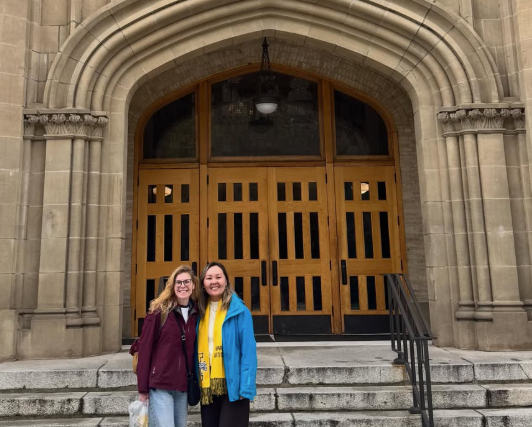
Marina (left) and Gulzat (right) outside the Administration Building at the University of Idaho.
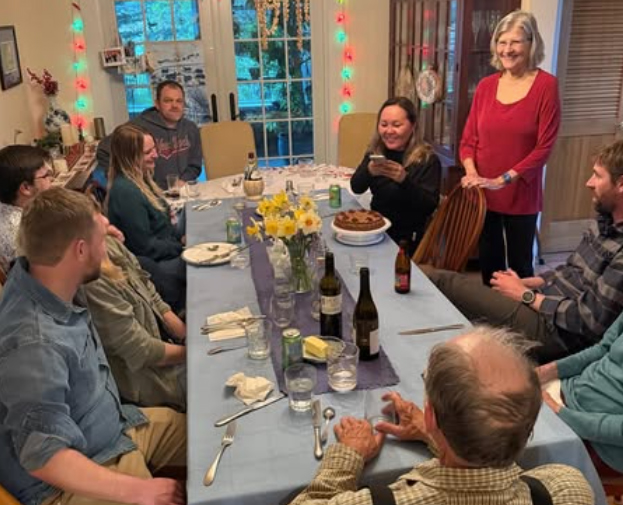
Gulzat, the TIFO team, and friends getting ready to enjoy dessert after a lovely dinner.
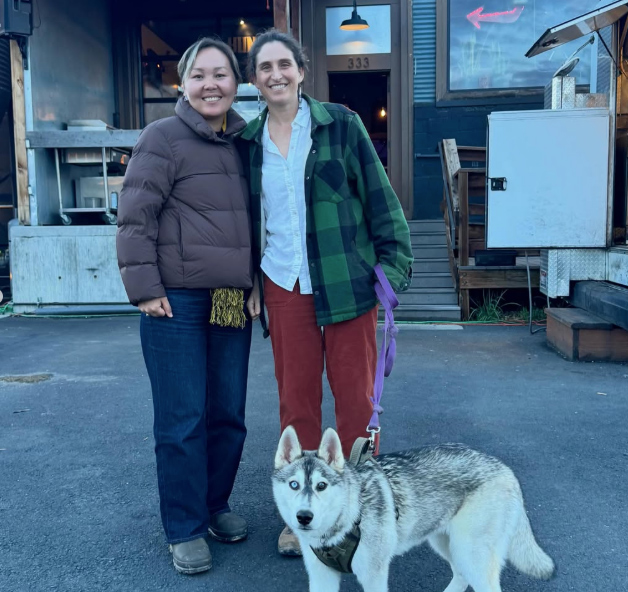
Gulzat (left) and Casey (right) with TIFO office dog Luna.
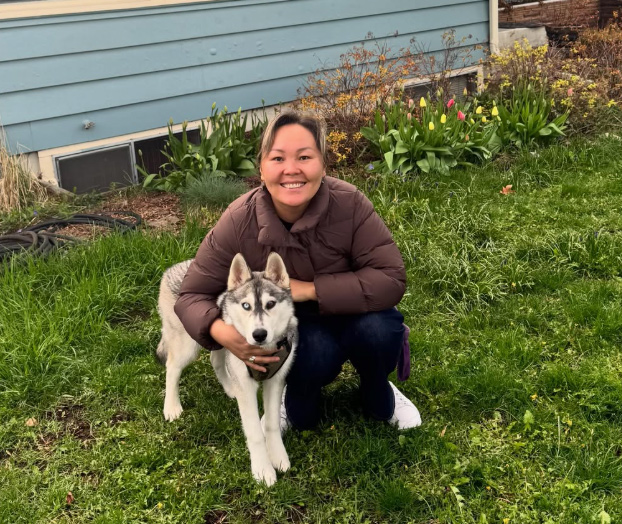
Gulzat and TIFO office dog Luna.
This past winter, we prepared for stakeholder workshops with national-level government representatives in Kazakhstan and Georgia. These were key to increasing government engagement and support for our work with local NGOs and community representatives in both places.
The escalation of conflict in Iran, which began in late February, prompted us to carefully evaluate our planned activities and travel. What started out as a 10 to 14-day plan to visit partners, hold meetings, and attend workshops turned into a whirlwind round-the-world adventure that had to avoid travel through the Middle East, work around unplanned government holidays, and minimize time spent abroad. After checking US Department of State warnings, conferring with colleagues at MSF, and securing extra insurance in case of travel interruptions, we embarked on an 8-day journey to hold workshops in Astana, Kazakhstan, and Tbilisi, Georgia. Both workshops were successful and worth every moment spent in airplanes (Casey counted 39 hours) and airports (35 hours).
In Astana, Kazakhstan, representatives from the Ministry of Environment expressed shock at the severity of environmental contamination in Shymkent, and we are in the final stages of signing a partnership agreement with the Ministry of Health to advance a collaborative effort to develop interventions to prevent children’s exposure to lead. In Tbilisi, Georgia, representatives from the local government in Kutaisi presented a development plan for the contaminated site along the Litafoni River, and gave feedback on which of the intervention options we presented would be feasible for their future site plans.
The word “meeting” or “workshop” can seem uneventful and routine, but when developed and implemented appropriately, events like these are vital for moving forward as partners in our projects. We left feeling optimistic and energized about the next steps to address environmental contamination in both places. And as always, we are grateful to Environmental Health & Pollution Management Institute (EHPMI) and Human Health Institute (HHI) for bringing stakeholders together for meaningful conversations to chart paths forward.
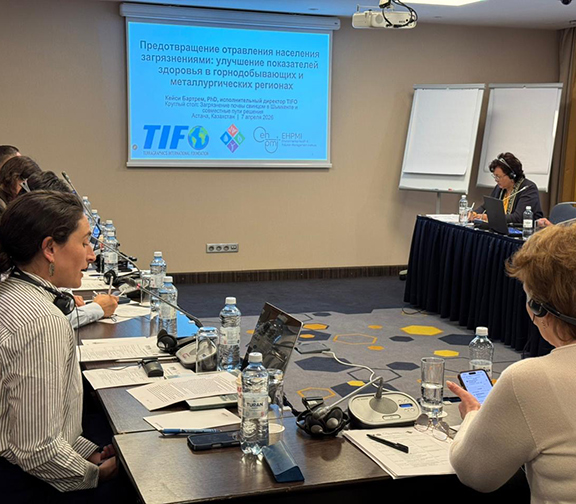
Casey Bartrem (left) shares examples of successful environmental health interventions from past and ongoing TIFO projects globally.
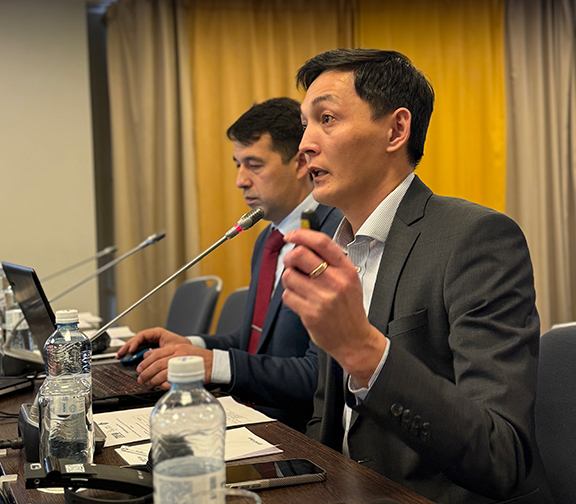
TIFO partners Aidar Kapassov of the Human Health Institute -HHI (front) and Petr Sharov of the Environmental Health and Pollution Management Institute – EHPMI (behind) present on the severity of health risks to children in Shymkent.
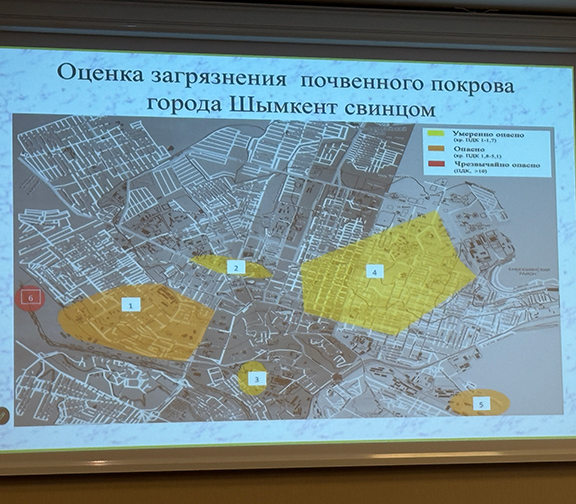
EHPMI presents their geospatial assessment of areas where children’s blood lead levels are expected to exceed safety thresholds, based on environmental contamination data TIFO, EHPMI, and HHI collected in the summer of 2025.
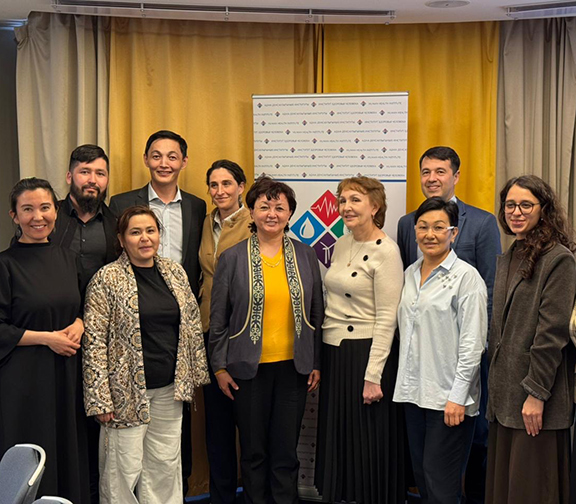
Participants in the Astana workshop, including representatives from TIFO, EHPMI, HHI, and the Kazakh federal government, gather for a group photo after the discussions.
Dear TIFO Friends and Supporters,
It is with a full heart that I share some bittersweet news: I will be stepping away from my role at TerraGraphics International Foundation to begin a new chapter with the Moscow Food Co-op.
This was not an easy decision. The years I’ve spent with TIFO have shaped me in ways I could never have anticipated. I’ve had the privilege of working alongside extraordinary colleagues, partners, and communities — people whose dedication to environmental health and human dignity has inspired and motivated me every single day. Together, we’ve taken on work that matters, and I am so proud of what we (this includes all of you!) have built.
But more than the projects and the milestones, what I’ll carry with me are the people. The relationships I’ve cultivated here — with each of you, with our partners around the world, with the communities we serve — have been the true gift of this work. Your generosity, your trust, and your belief in TIFO’s mission have made everything possible. Thank you. Truly. Your investment in TIFO is an investment in something larger than any one of us, and the impact of your generosity will outlast my time here many times over.
I’m excited about what’s ahead at the Co-op — serving my community in a new way. While my path is shifting, my commitment to the values that brought me to TIFO is not. I leave knowing that this organization is in capable, passionate hands, and that the mission will continue to grow because of supporters like you.
I hope our paths cross again — and in a town like ours, I’m confident they will. If you find yourself at the Co-op, please come say hello! Thank you for everything. It has been an honor.
With deepest gratitude,
Whit
A new federal tax law signed in July 2025 could significantly reshape charitable giving beginning this year. The legislation expands tax incentives for some donors while introducing new limitations for others, potentially changing how individuals and corporations approach philanthropy. Key updates include a new charitable deduction for non-itemizers, adjusted deduction thresholds for itemizers, and new rules affecting high-income donors and corporate giving.
For nonprofits and donors alike, these changes may influence fundraising strategies, year-end giving decisions, and long-term philanthropic planning.
This book explores the unsettling rise of serial killers in the Pacific Northwest during the late twentieth century, weaving together true crime, environmental history, and social commentary. Fraser examines how industrial pollution, lead exposure, and broader societal conditions may have shaped an era marked by violence and fear.
Thought-provoking and deeply researched, the book challenges readers to consider the hidden connections between environment, public health, and human behavior.
Trigger Warning: This book contains graphic discussions of murder, violence, sexual assault, abuse, trauma, and environmental contamination. Readers sensitive to true crime or disturbing subject matter may want to approach with caution.


Meat n’ Greet with TIFO
5:30 - 7:30 PM, Aug. 18, 2026
630 N Almon St, Moscow, ID
Eat sausage, do good! Celebrate and support TIFO by enjoying delicious eats from Happy Hog Meatery and beverages from Shattuck West.

TIFO Bingo Night w/ Hunga Dunga
5:30 - 9:00 PM, Aug. 20, 2026
1912 Center
412 E 3rd St, Moscow, ID
Come support TIFO at nonprofit bingo night! Bring your own snacks, drinks for sale from Hunga Dunga. $5 entry.
- John Paulson Gets a Gold Mine in America’s Critical Minerals Scramble. Bloomberg.
- My Son Never Turned 7. Because of Choices in Washington, Others Won’t Either. New York Times.
- How the Trump Administration Ended Independent Science at the E.P.A. New York Times.
- A Supreme Court case over pesticides is bringing out the ‘MAHA moms’ — and threats of consequences for the midterms. CNN.
- Mount Sinai Study Uses Baby Teeth and Brain Imaging to Reveal How Early-Life Metal Exposures Shape Brain Development and Behavior. Mount Sinai.
- A surge in violence followed Trump’s cuts to USAID programs in Africa, a study finds. AP News.
- This Is What Happened When Trump Abandoned the World’s Poorest Children. New York Times.
- Idaho sees a ‘massive influx’ of mining projects. Here’s why. Idaho Statesman.
- U.S. Mint Buys Drug Cartel Gold and Sells It as ‘American.’ New York Times.
- Trump admin steps up next phase of effort to protect children’s health. AOL.