





Newsletter contents
Early in March, we had the opportunity to gather some of our core team members for a mini-retreat in southern Idaho. This gave us a chance to pause, reflect, and refocus – an important moment after the chaos of the past year. It allowed us to reflect on what drives each of us to pursue this work. We were reminded of how similar our passions and “whys” are.
The world feels uncertain in ways that are impossible to ignore — politically, environmentally, and, for many of the communities we work alongside, deeply personal. We hear it in conversations with colleagues and partners. We see it in the news. And I feel it some mornings before the day even gets started.
The turmoil of the past year persists, but our team, partners, and supporters continue to show up. Our shared belief in this work means progress in Karakalpakstan, Kazakhstan, Georgia, and in our US projects. The science continues, the relationships deepen, and the communities we serve continue to work towards a brighter future for their children. In a loud and uncertain world, I find myself returning again and again to something simple and foundational: the belief that every person — wherever they live, whatever language they speak, whatever their circumstances — deserves to live in a safe environment. That’s what gets our TIFO team and partners out of bed every morning.
What sustains us, more than anything, is the people we work with and serve, and people like you who are integral to the hard-won successes.
What I hold onto when the world feels overwhelming is not the certainty that everything will be fine, but the knowledge that doing careful, honest, community-centered work is always worth doing — regardless of what else is happening.
We are grateful to be doing this work, especially with you.
With warmth and thanks,
Casey
The Shoshone-Paiute Tribes (SPT) of the Duck Valley Indian Reservation (DVIR) continue to set the direction for our shared environmental health work.
We’re building momentum in supporting educational programs on the reservation. The Tribal Environmental Protection Program (TEPP) and Fish & Game (F&G) have identified consistent engagement with K-12 students as a priority, and we have been collaborating with TEPP, F&G, and the Owyhee Combined School (OCS) to explore how that vision can be woven into the existing school curriculum. We have been brainstorming activities that could bring environmental health and land stewardship concepts into the classroom, centering the Tribe’s own relationship with its lands and history.
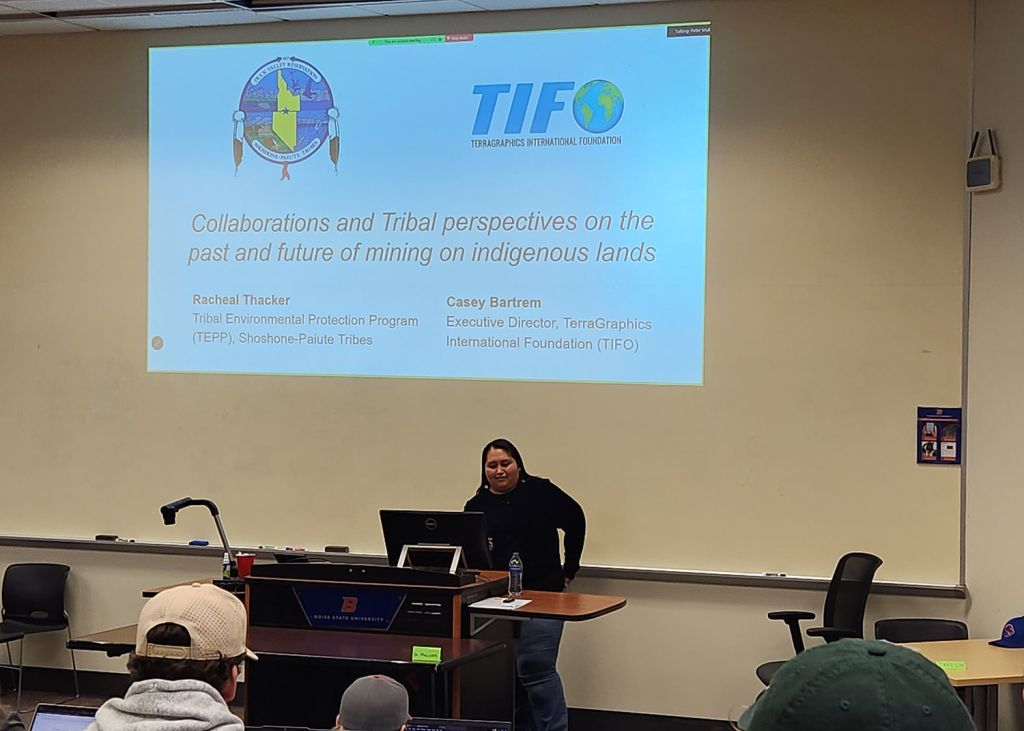
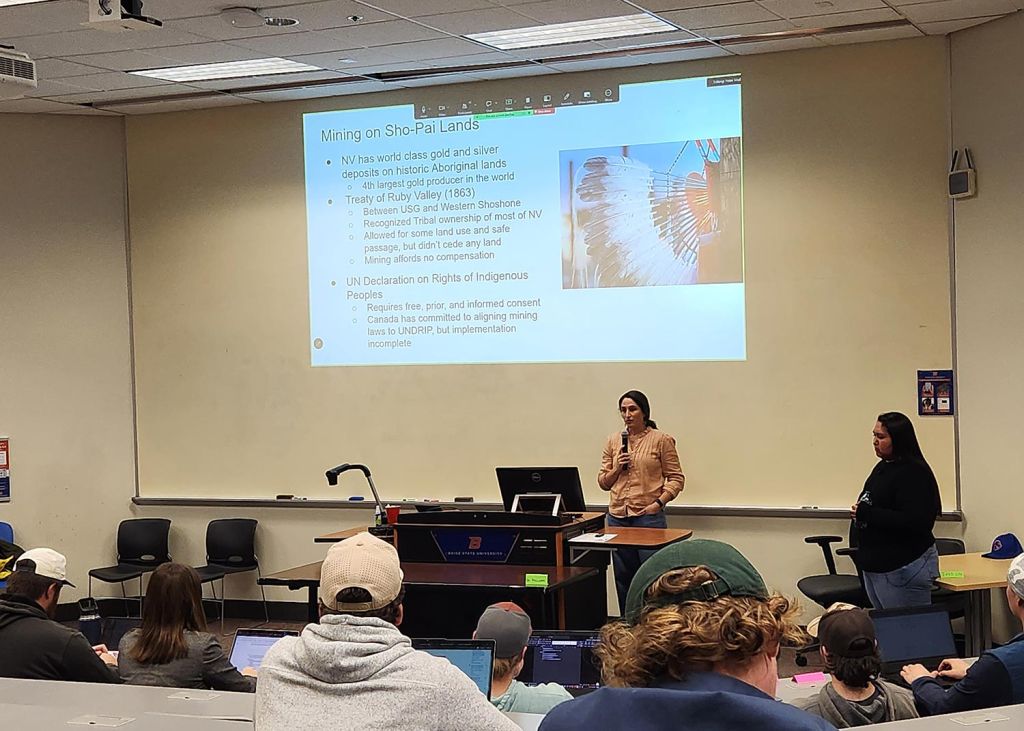
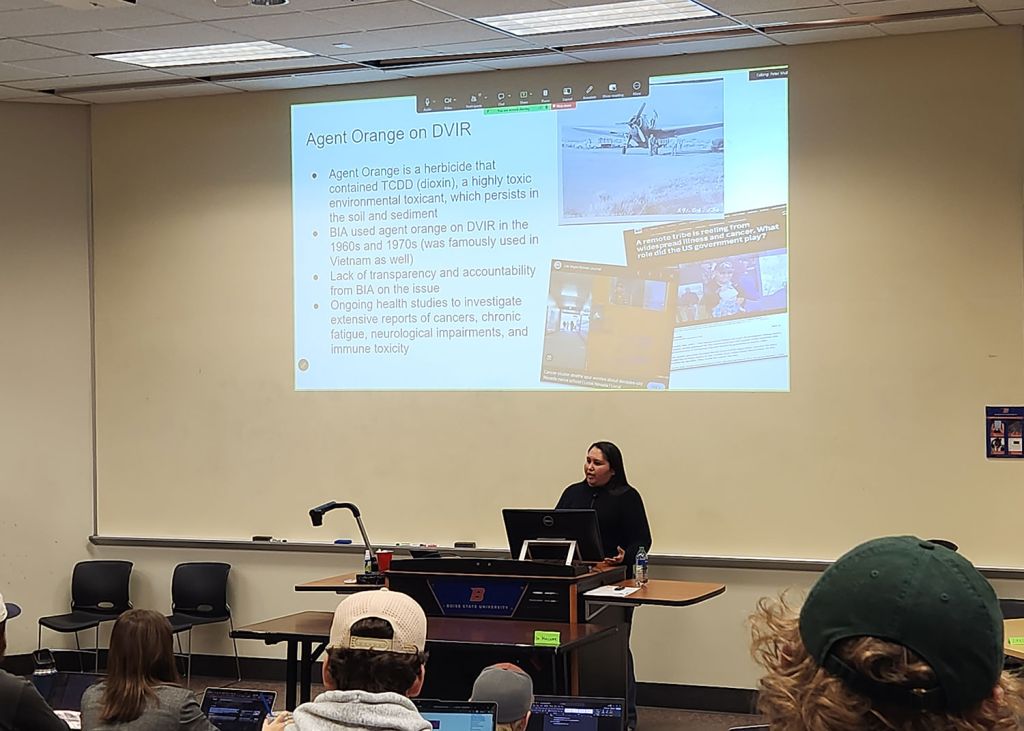
In early March, we were honored to support Racheal Thacker of TEPP in bringing the Tribe’s environmental health story to a broader audience. We joined Racheal for a presentation at Boise State University as part of the MARSUNEX seminar series — a powerful moment of story and knowledge sharing.
We have also been helping connect the Tribe with federal Brownfields resources that may open new funding pathways for environmental assessment, site remediation, and waste management at abandoned contaminated sites on the reservation.
This quarter has not been without difficulty. The loss of the EPA Environmental Justice grant last year created real constraints on SPT’s staff capacity to work on the Seven Generations project. What hasn’t changed is the relationship and the commitment on both sides to continue finding ways forward together.
While studying biochemistry and molecular biology at Yakima Valley College, Yoni Rodriguez was part of a research project investigating fetal anencephaly associated with contaminated water on the Yakama Indian Reservation. The study found elevated levels of lead, nitrites, nitrates, and coliform bacteria. Yoni also tested the water at his family’s home and found elevated levels. The discovery sent him down a path he didn’t yet have a name for, and left him with a question that would shape everything that followed: what is our environment doing to us, and what can we do about it?
As a first-generation student, he found his way to TIFO through a casual conversation with a friend. With notes in hand and nerves at “level 10,” Yoni met with TIFO Executive Director Casey Bartrem and co-founders Margrit von Braun and Ian von Lindern, who asked what he wanted to do and then helped him do it. They reviewed his Fulbright and graduate school application materials, and they showed up in person to celebrate when he became a Fulbright semifinalist. More than the practical support, Rodriguez felt they modeled the application of environmental health outside of a textbook and classroom — exemplifying that a career was sustainable, that funding cuts were survivable, and that the answer to a closed door was simply to find another one and apply.
“Collaborating with TIFO gave me confidence and the feeling like I’m on the right path,” says Rodriguez, “As an undergraduate, the TIFO team helped me see the potential to have a career in environmental health…seeing how they have managed their life and their roles, the networks they’ve built, that was a huge life skill.”
Rodriguez went on to earn a master’s in exposure science at the University of Washington, to assess lead exposure in Afghan refugees with King County Public Health as a Graduate Research Fellow, to hold positions as a Research and Policy Analysis and Environmental Public Health Scientist at NASA, and to work as a Research Scientist at the University of Washington. He will join the faculty at Central Washington University in fall 2026.
His path included biochemistry, dabbling in engineering, federal research, and two positions lost to budget cuts — proof that, in environmental health, persistence matters more than a perfect trajectory, and that the right mentors, at the right moment, can make all the difference.
“You don’t need to be a STEM major to get into environmental health,” says Rodriguez. “It helps, but it’s not necessary. We just need people who really care about it and have good ideas, and anybody can have a good idea.”
Connect with Yoni: https://www.linkedin.com/in/yoni-rodriguez/
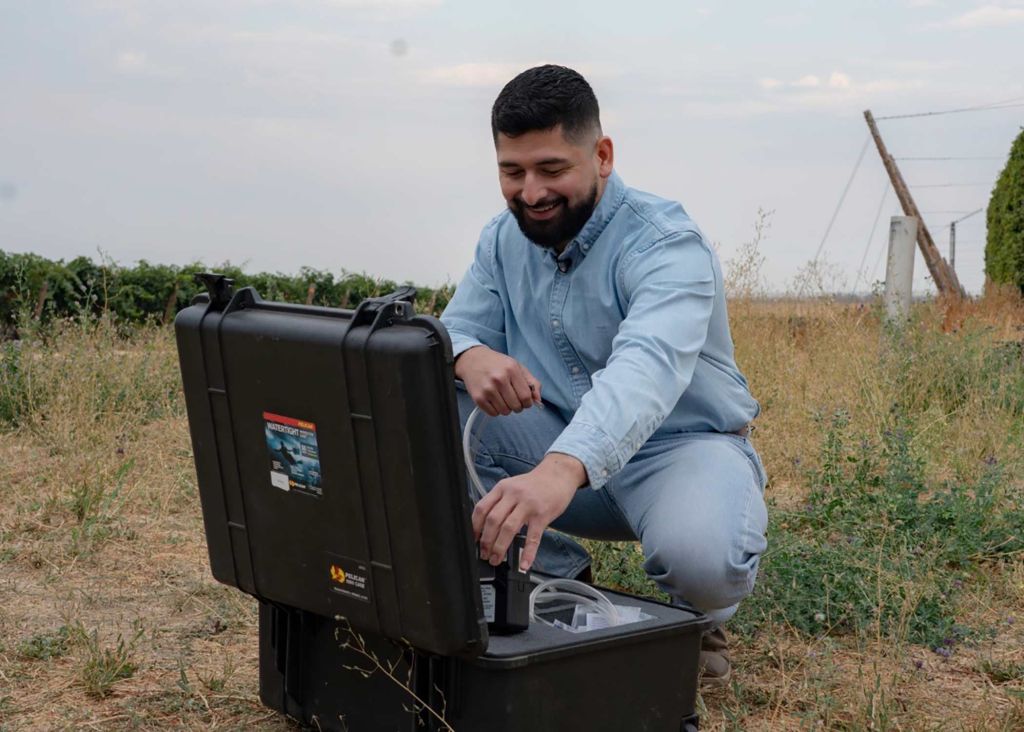
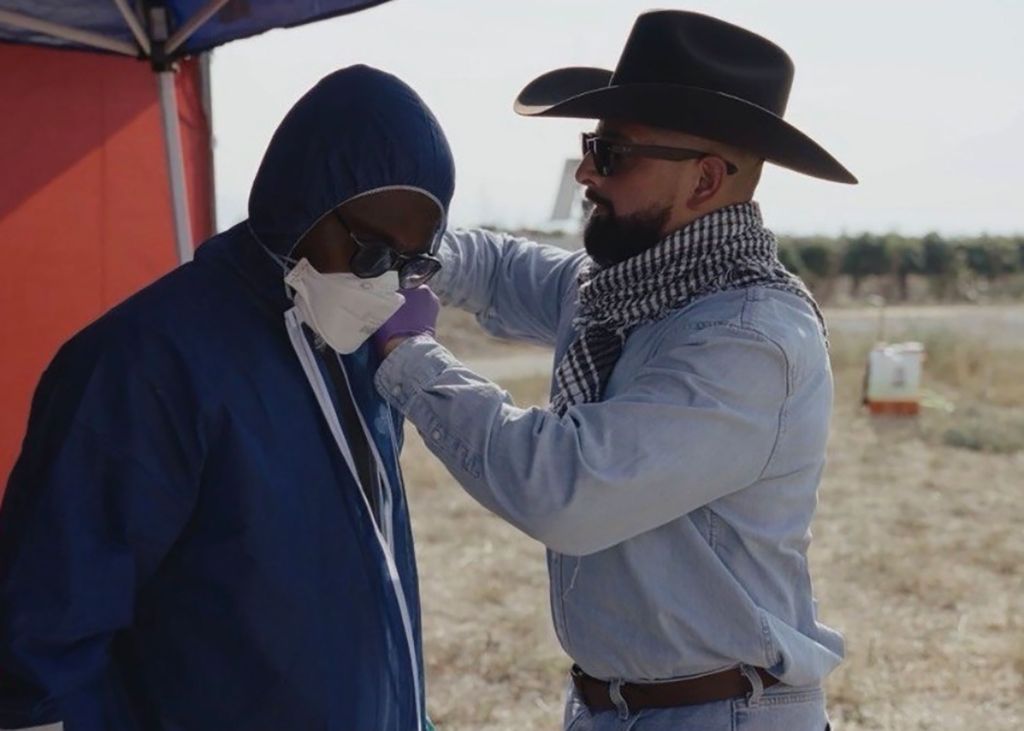
Rodriguez preparing the SKC pump for air quality sampling. The SKC pump can be thought of as a robotic lung that pulls air from the subject’s airway and deposits it into a filter, which is analyzed in the lab to quantify any pollutants the subject was exposed to by inhalation.
Rodriguez adjusting the SKC pump onto the subject and placing the intake near his airway to ensure accurate data representation.
Rodriguez training Brazilian Jiujitsu in the Leme Neighborhood, also known as a “favela,” with the “On The Hill Jiu Jitsu” a social project focused on providing children and adolescents the opportunity for personal, physical, and emotional development through jiujitsu.
Rodriguez surfing at Ipanema Beach in Rio de Janeiro, Brazil (2026).
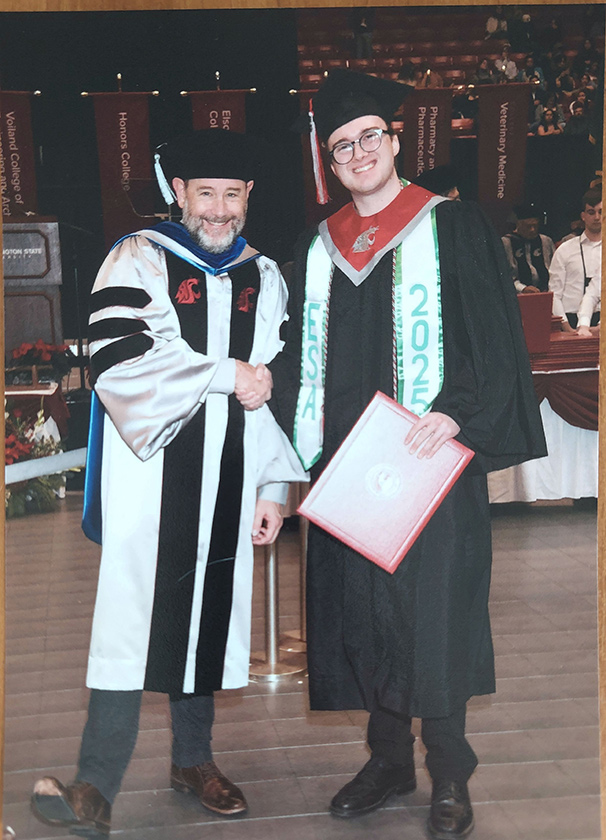
I stepped away from TIFO at the end of summer 2025 to finish up my final semester at WSU. I graduated in December with a bachelor’s in environmental and ecosystem sciences. Since then, I’ve continued as the project support intern at TIFO, helping with a variety of projects.
My most notable contribution has been using my coding skills to develop an automated workflow for the EPA’s All Ages Lead Model (AALM). AALM is a biokinetic model that predicts blood lead levels from different exposures to air, water, soil, and food, using an Excel user interface. Our study examines how different sources of lead exposure in low and middle-income countries affect blood lead levels. AALM doesn’t support batch processing, so if we want to see how blood lead levels change across 30 different concentrations and intake levels, we have to enter the parameters, run the simulation, and copy the data to a table 30 times. I created a Python script that allows us to upload a file containing the different concentrations and intake levels we want to test, and it automatically runs the simulation at each level and copies the results to a single table for easy viewing. The automation is helping us process data much more efficiently and accurately than manual data entry. I’m now a coauthor of this study, which is the first publication I’ll be a part of.
Unfortunately, my time at TIFO will come to an end this May, when I’ll be moving back home to begin a maritime environment and sustainability internship at the Port of Seattle. While I’m sad to be leaving TIFO and the Palouse, I’m grateful for the time I’ve had to work with these incredible people and excited for this next chapter in my life.
We have been so fortunate to have Steven’s support over the past year and are thrilled for him as he takes his skills and knowledge forward in the next chapter of his career. His contributions to TIFO projects are tremendous and will have a lasting impact on our shared work.
Connect with Steven on LinkedIn.
Ian and Faith are excited to formally launch TIFO’s Pediatric Cancer Assessment Initiative (PCAI)—a focused effort to evaluate how recent changes to environmental rules and regulatory interpretations in Idaho and nationwide may impact the health and safety of Idaho’s children. Building on TIFO’s long history of advancing children’s environmental health, this initiative will support research and policy development to strengthen protections against pediatric cancers, particularly those associated with mining and air toxics.
As part of this effort, we’ve expanded the PCAI team by bringing on two new members. Kate Cockerille is a first-year law student at the University of Idaho College of Law and a Boise native. Sierra Brantz — a Silver Valley native — joins TIFO after earning her Master’s in Public Health at the University of North Carolina and serving as an Environmental Health Fellow for the EPA. (Stay tuned for more information in our next newsletter!)
PCAI’s initial work is to develop a white paper that assesses pediatric cancer risks associated with evolving environmental policies and identifies key elements of air toxics frameworks that best protect children. This includes a comparative review of state regulatory approaches, evaluation of Idaho’s longstanding and proposed interpretations of its air toxics rules for the Stibnite Gold Project, and analysis of how recent policy changes may impact life-stage-specific cancer risks for children.
At the same time, litigation over the Stibnite Gold Project continues to move forward. Final arguments on the air permit will be heard in late spring, and a decision is expected later this summer. Ada County District Court will decide whether or not the Idaho Department of Environmental Quality exceeded its authority by reinterpreting longstanding air toxics rules in a way that could allow significantly higher carcinogenic exposures—particularly for children—than previously permitted.
Regardless of the outcome, the implications of this case extend well beyond a single project. It raises broader questions about how environmental standards are applied, how regulatory agencies exercise their authority, and what level of protection is afforded to the most vulnerable communities. Through this Initiative, the team will provide thoughtful, science-based analysis.
This work is also informing broader conversations about energy, environmental policy, and public health. Ian will be speaking on a panel hosted by Boise State University’s Energy Policy Institute as part of its Power Talk series, which brings together energy leaders and interested audiences to share insights on policy and real-world decision-making. He will join the panel “Digging in on Critical Minerals Mining: Permitting and Siting with Implications for Energy and Water” on April 2, 2026, at 1:30 p.m. MT. Ian will be sharing his perspectives on the future of critical mineral mining and what a responsible return of the industry could look like for Idaho and the United States. Registration for virtual attendance is free and open to anyone.
Following that panel, TIFO board members—Ian, Margrit, Denny Dobbin, and Phil Landrigan—will participate in the 3rd Annual Latin American Conference on Environmental and Occupational Health—From Legacy to Emerging Landscapes, hosted by Collegium Ramazzini. Ian and Margrit will deliver a keynote lecture, with Ian speaking on “Legacy of Lead—Historic and Economic Factors” and Margrit on “Sources of Lead Exposure from the Informal Sector.” Their presentations will draw on decades of experience and policy development to examine how lead regulation evolved to protect vulnerable populations, what went wrong when hazardous industries shifted risks globally, and what those lessons mean for today’s resurgence of mining and emerging environmental health challenges.
For background on the Stibnite Gold Project
From Bloomberg reporting, explore the mine's role in the U.S. government's efforts to secure a domestic antimony supply, as well as the environmental, economic, and tribal concerns surrounding the project.
For an overview of mining operations in Idaho
John Robison of the Idaho Conservation League sits down with The Ranch podcast to talk about how different projects have approached conservation—and where some have fallen short.
For a critical examination of the Stibnite Gold Project
Dive into how longstanding legal loopholes in the permitting process may allow public health risks to persist. Idaho Law Review article by TIFO legal intern Faith Quigley titled Fool’s Gold: The Stibnite Gold Project, Critical Minerals, and the Public Health Perils of Antiquated Hardrock Mining. (Online access forthcoming.)
I relocated to Boise to spend my last semester in a “semester-in-practice” in Judge Winmill’s chambers at the U.S. District Court for the District of Idaho. In addition, I am assisting an Idaho state representative with legal research during the legislative session, continuing work as a Limited License Legal Intern in the College of Law’s Criminal Appellate Legal Aid Clinic, serving in two research assistant positions, and writing and speaking on mining law and corporate governance. Watch my recent guest lecture at the MARSUNEX seminar here!
It’s been a rewarding season—this winter I was honored to receive the Alumni Award for Excellence. In April, I am excited to be the Criminal Appellate Clinic’s first law student to give a solo argument in front of the Idaho Court of Appeals. I also continue to serve on the Board of Editors for the Idaho Law Review (online access forthcoming), which recently published its 62nd Volume, including my article on the proposed Stibnite Gold Project.
At the same time, continuing my work with TIFO has kept me grounded in the environmental, public health, and community-driven passions that first drew me to law school. It has been especially rewarding to help fully launch the Pediatric Cancer Assessment Initiative alongside Ian, double down on our efforts to protect Idaho’s kids, and still spend time with the TIFO team in person at the retreat in southern Idaho! I’m excited to stay involved (over Zoom for now!) and continue growing with this work.
Looking ahead, I will graduate this May and spend my summer preparing to sit for the Idaho bar exam in July 2026. I also recently accepted a Civil Litigation Fellowship with the Idaho Attorney General’s Constitutional Defense & Civil Litigation Division, where I’ll start in late April. I will be staying in Boise in that role through August 2027, before heading back north to Coeur d’Alene to clerk at the U.S. Court of Appeals for the Ninth Circuit during the 2027-28 term. It’s a busy stretch, but I’m incredibly grateful for the opportunities to learn across so many different spaces right now—and to be part of work that feels both challenging and meaningful.
Faith sitting on the stairs in front of the Idaho State Capitol Building.
Faith enjoying a sunny day in downtown Boise.
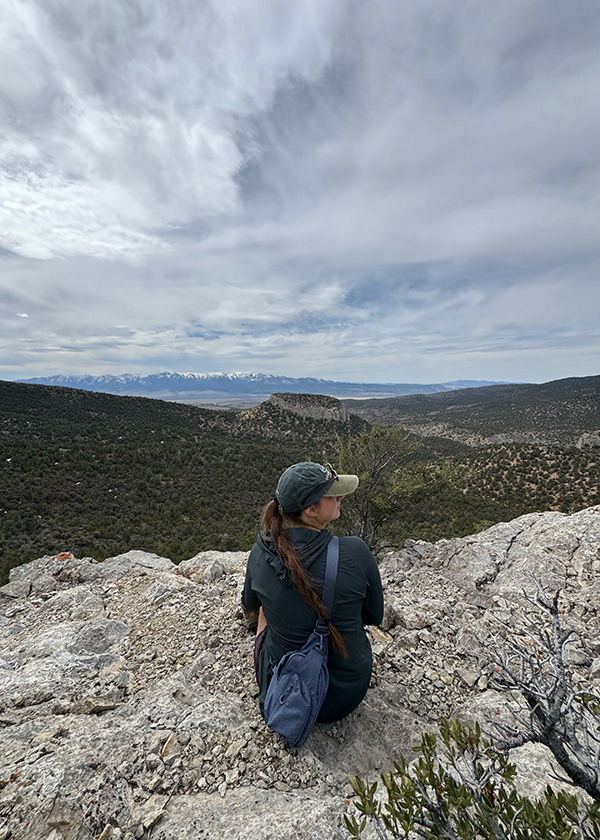
Faith taking in the view during a hike in the hills outside Boise.
Faith running on the Greenbelt in Boise.
We’re thrilled to share that funding for the Partnership for Environmental Health (PEH) has been renewed for a second year! We are grateful to our partners (EHPMI, HHI) and Sigrid Rausing Trust for continuing this meaningful effort to improve children’s health in affected communities. Like many of our initiatives, this effort began with the support of committed donors who helped launch the work until we could secure external funding. We’re now building on strong momentum from last year, when we completed detailed assessments of heavy metal contamination in Shymkent and Kutaisi, identifying serious risks to public health. In April, we will return to Kazakhstan and Georgia to meet with national government leaders to discuss practical paths forward to address environmental contamination and improve the lives of children and families.
They say that the intensity of grad school ebbs and flows, and I feel like I’m heading into a more chaotic period. I’m taking two quantitative-heavy classes that are interesting, keep me busy, and, importantly, are applicable to my research. April will be busy with exams and final projects, in addition to existing classwork. The spring semester always seems to go by really quickly. Maybe it’s the drastic change in seasons from January, and whatever winter we had, to early May ripe with greenery, and the summer, which always seems to get booked before it happens. I’m really excited to spend my first May on the Palouse! The past two I was in Uzbekistan for research and a fellowship.
I am currently focusing on two projects. The Aral Sea project investigates trends in drinking water quality. I’m learning that not everything in a massive, messy dataset can be addressed, so prioritization with a focused objective is key. I’m thankful for Casey and Ian’s help during long workshop sessions. I’m also on a team from the University of Idaho that’s starting a project with the Idaho Water Resources Research Institute. Similarly, we are looking at trends in Idaho’s water quality. We are working with stakeholders across agencies to identify the most pressing issues.
Both projects are grounded in a shared purpose: partnering with stakeholders to identify what matters most and working within the constraints of existing government monitoring datasets to answer those questions.
Spring summary: super skills strengthening
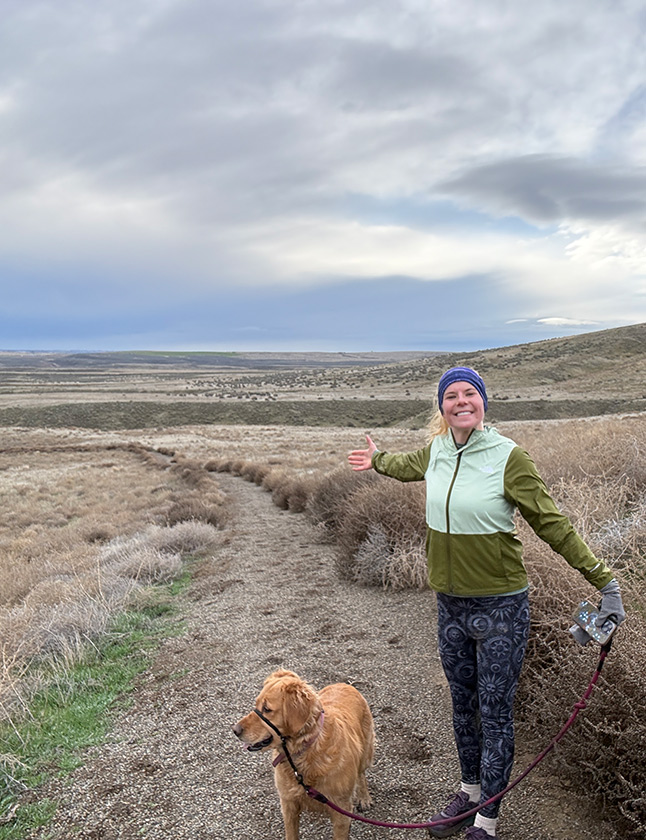
Marina and TIFO office dog Biscuit pause their run for a photo op on a path near the Oregon Trail outside of Hagerman, ID.
We are thrilled to share that Casey Bartrem, TIFO Executive Director, has been selected as a fellow in the W.K. Kellogg Foundation (WKKF) Community Leadership Network. This distinction speaks to both her leadership and her deep, sustained commitment to communities.
Casey is one of just 80 fellows selected nationwide from a highly competitive pool of applicants for this year’s fellowship class, which runs from January 2026 through June 2027. Fellows come from communities across the United States, spanning a wide range of disciplines and backgrounds — all united by a commitment to creating equitable conditions where children, families, and communities can thrive.
The WKKF Community Leadership Network, developed in partnership with the Center for Creative Leadership, is an 18-month program designed to equip leaders with the skills, networks, and tools to navigate today’s challenges and drive collaborative, transformational change in the lives of children. Fellows participate in six in-person multi-day gatherings, work one-on-one with an executive leadership coach, and become part of a growing network of more than 1,200 change agents around the world through the WKKF Global Fellows Network.
The fellowship couldn’t be a better fit for Casey — or for the values that have always guided TIFO. At its core, the program is about investing in community-rooted leadership: the belief that lasting change happens when leaders listen deeply, build genuine partnerships, and bring people together around shared purpose. That is, in many ways, exactly what TIFO has been doing for more than a decade.
A note from Casey
In many ways, the science underpinning TIFO’s projects is straightforward, at least compared to some of the political and socio-economic challenges. Our job is not only to use rigorous science, but also to convert science into action, to use it to serve communities impacted by injustice and make science the tool that amplifies the work of local leaders. I’m overjoyed and humbled by the WKKF Fellowship opportunity because it’s a way to continue to combine technical knowledge with respectful approaches to mentorship, partnership, and service. Ultimately, it is an opportunity to learn to be the kind of leader I have benefited from knowing – including Margrit von Braun, who went through the same program 30 years ago and still talks about how life-changing it was for her.
At our first session in Battle Creek, Michigan, the home of the Kellogg Foundation, I was awestruck by the individuals in the cohort. They are changemakers working in marginalized communities across the US on issues ranging from early childhood education to prison reform, nutrition and agriculture to workforce development. As we toured the WKKF office and learned about their focus on investing in people to improve children’s lives, it felt so familiar because it’s the same strategy TIFO’s co-founders used to found and guide TIFO. This opportunity feels like coming full circle in many ways, and I’m honored to be among such incredible individuals.
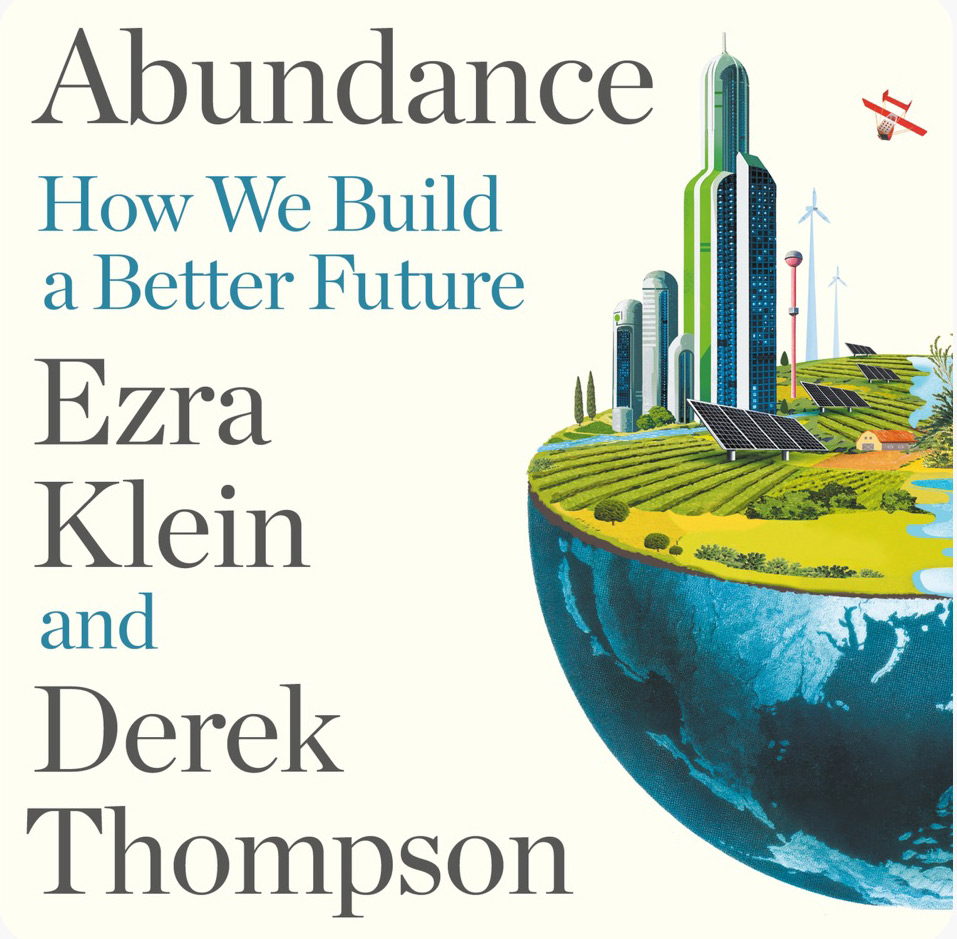
Abundance is a once-in-a-generation, paradigm-shifting call to renew a politics of plenty, face up to the failures of liberal governance, and abandon the chosen scarcities that have deformed American life.
“Spectacular…Offers a comprehensive indictment of the current problems and a clear path forward…Klein and Thompson usher in a mood shift. They inspire hope and enlarge the imagination.” —David Brooks, The New York Times
Energy Policy Institute Power Talk: Priorities for Permitting and Siting Critical Mineral Mining in Idaho
12:30-2:00 PM PT, Thursday, April 2, 2026 | Virtual
Tune in to hear TIFO co-founder Ian von Lindern participate in a timely conversation about how Idaho balances responsible resource development with environmental stewardship.

TIFO Presentation at Screening of Erin Brockovich
6:30 PM - Doors Open
7:00 PM - Event Begins
Tuesday, April 28, 2026
Kenworthy Performing Arts Centre
508 S. Main, Moscow, ID
Tune in to hear TIFO Executive Director Casey Bartrem speak on TIFO's journey and projects as part of the introduction for the movie Erin Brockovich.
Save the Date: Idaho Gives
May 4-7, 2026
Support TIFO and other Idaho nonprofits during this statewide giving event.

Idaho Gives: Nonprofit Trivia
6:30 PM, Wednesday, May 6, 2026
Moscow Alehouse
226 W 6th St, Moscow, ID
Enjoy a fun evening of Trivia (or just come for dinner) with a percentage of all drinks & food proceeds going towards local area nonprofits.

Idaho Gives: Groove for Good
May 7, 2026
5:30 PM - Doors open
6:00 PM - Music starts
Kenworthy Performing Arts Centre
508 S. Main, Moscow, ID
Celebrate area nonprofits with live music, beverages, and delicious food!

Save the Date: Meat n’ Greet
5:30 - 7:30 PM, Aug. 18, 2026
630 N Almon St, Moscow, ID
Eat sausage, do good! Celebrate and support TIFO by enjoying delicious eats from Happy Hog Meatery and beverages from Shattuck West.

Save the Date: TIFO Bingo Night w/ Hunga Dunga
5:30 - 9:00 PM, Aug. 20, 2026
1912 Center
412 E 3rd St, Moscow, ID
Come support TIFO at nonprofit bingo night! Bring your own snacks, drinks for sale from Hunga Dunga. $5 entry.
- The Fight for the Heart of the US Environmental Protection Agency. Grist.
- Trump Is Determined to Poison His Own Voters. The New Republic.
- Roundup’s Other Problem: Glyphosate is Sourced from Controversial Mines. Civil Eats.
- New Study Reveals How a Single Toxic Exposure Could Put 20 Subsequent Generations at Risk: ‘This is Not Going to go Away’. The Cool Down.
- What to Know About Glyphosate, the Herbicide Behind a Trump Executive Order That’s Angered MAHA Moms. CNN Health.
- The US Used to be Really Dirty – Environmental Cleanup Laws Have Made a Huge Difference. Dayton Daily News.
- A Huge Number of People Starved to Death After Elon Musk Cut USAID’s Funding. Futurism.
- Synthetic Chemicals in Food System Creating Health Burden of $2.2tn a Year, Report Finds. The Guardian.
A Study Is Retracted, Renewing Concerns About the Weedkiller Roundup. The New York Times. - Scientists Sound Alarm Over Threat ‘99% of the American Public’ May Not Know About: ‘We are Facing a Silent Epidemic’. The Cool Down.
- Mormon Hair Clippings Preserve Legacy of US Ban on Leaded Gas. Science Alert.

